What Is Rolfing?
It has been an honor and a delight to practice Rolfing in Minneapolis since 1992, because Rolfing Structural Integration is the great-grandmother of every Western therapeutic, soft-tissue bodywork modality. It’s the classic, original system (with dozens of copycat imitators romping around out there).
One of the unique hallmarks of Rolfing is that, while chiropractors and osteopaths work with bones, and massage therapists work with muscles, Rolfers work primarily with fascia, otherwise known as connective tissue.
The beauty of fascia
Fascia has been called “the packing material of the body.” It weaves and honeycombs everywhere throughout your body in beautiful webworks. Fascia wraps every muscle, organ, and bone in your body. It thickens to become tendons and ligaments. It literally gives you your shape.
Fascia can get dysfunctional through acute trauma, chronic misuse, emotional stress, and all sorts of lifestyle habits (sub-optimal diet, smoking, dehydration, sedentary living). Fascia can get short, thick, tight, hard, contracted, “gluey,” and so on.
Rolfing changes your shape
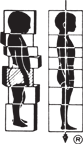
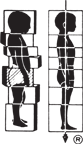
As a Rolfer, I assess your structure—visually and with my hands—and I work mindfully to lengthen, soften, melt, differentiate, and unwind fascia that needs it. In the process, Rolfing changes your shape.
· Pelvises that are tilted too far forward (creating that “swaybacked” pattern) become more horizontal.
· Heads and shoulders that are too far forward soften back.
· Rotations in the hips and upper legs that create “X”- patterns ( “knock-kneed”) or “O”- patterns (“bow-legged”) are eased.
· Bodies get longer, taller, freer.
Gravity is the therapist
Another thing that separates Rolfing from other bodywork systems is that I work with your fascia with very specific goals in mind—goals unique to Rolfing. One of those goals is to allow gravity to flow through you in a natural, healing, uplifting way. As Ida Rolf said, “A disorganized body (meaning a body that is not well aligned or integrated) is at constant war with gravity.” That war is exhausting. Another goal is to differentiate and align major body segments, a principal Rolfing shares with yoga.
Your body’s innate healing intelligence
As a Rolfer, I view your body through the lens of holism. That means I have a deep trust in the innate healing intelligence of your entire body as a system—a trust that the more we can facilitate order, alignment, space, integration, pliancy, and openness through your entire structure, the more your body will naturally and spontaneously resolve any issues, pains, or complaints, as well as prevent new ones.
What happens during a Rolfing session?
Rolfing sessions are 60 minutes long, and they begin with a brief intake, in which you tell me what brings you to Rolfing and what your goals are.
After that, I will do a brief visual analysis of your structure, which typically takes two or three minutes. Then we get to work. That means you lay on my old-school, gazillion-pound Rolfing table, and I use my hands, knuckles, and especially my elbows to slowly and mindfully melt, unwind, and lengthen your fascia in very precise ways.
Some clients like to stay mostly silent during the session and just concentrate on breathing and feeling, while others enjoy chatting. Both ways are great. The work gets done either way. After 29 years of doing this work, my hands go on “autopilot.”
Does it hurt?
In the 1960s and 1970s, Rolfing gained a reputation for being painful. But Rolfing has evolved dramatically since then. It’s become much more elegant and nuanced. I work very deeply, but even my most sensitive clients find their sessions to be relaxing and enjoyable.
In addition, you, the client, are always in charge. You and I stay in rapport about the depth of contact. And I sink into people’s tissues very slowly so if the work is ever getting more intense than you like, you have plenty of time to let me know.
Benefits of Rolfing
People come to me primarily for one (or any combination of) these three goals:
1) To get rid of pain
The majority of people come to me for relief from hip, knee, shoulder, or other joint pain—especially back and neck pain. Other musculoskeletal complaints that bring people to my office include chronic muscular pain (hamstring, quads, calf), plantar fasciitis, and painful and/or restrictive scar tissue from surgeries or acute traumas. As a Rolfer, I have a good track record with all of these sorts of issues.
2) For psychological growth
Deepening our embodiment—our ability to live in our bodies—is a beautiful way to soften out of our busy thinking brains, rest in the quiet richness of the present moment, and feel more alive.
Additionally, our emotional patterns are held in (and expressed by) our bodies. As the cliché goes, “our issues are in our tissues.” Psycho-spiritual constriction and contraction always show up as bodily constriction and contraction. And when my hands melt these somatic armorings, it can help to melt the psychological constriction and contraction. Because of this, for people engaged in personal growth, my work can be a valuable support.
3) For overall health, well-being, and injury prevention
People tend to simply feel much better when they receive Rolfing.
· Their breathing is freer
· Their bodies feel more open, long, and spacious
· They move more easily
· They’re more relaxed
· Most people report having more energy
· Their posture is more effortlessly aligned and upright
· Clients frequently report the “trademark” Rolfing experience of feeling more grounded yet, simultaneously, much lighter
Also, many people come to me for injury prevention. This is because having joints that are less restricted, compressed, torqued, and imbalanced tends to prevent joint issues and injuries. Rolfing makes bodies more pliant and pliant bodies flex like a willow tree in the wind. Brittle bodies snap. That’s why a lot of serious tennis players, golfers, cyclists, and other types of athletes view me as “their secret weapon” for optimal athletic ability, resilience, and injury prevention. (This is why so many NFL and NBA players have for decades used Rolfing.)